
Where to stay in Diocletian's Palace
When choosing where to stay in Diocletian's Palace, start with the address and its position within the historic quarter. The palace is part of a lived-in city, with homes and visitor accommodation inside the old fabric. A room near the Vestibule places you in a different part of that fabric from one approached through the northern lanes. Think about the places you want to revisit on foot and the route you will use with luggage.
This is a location guide rather than a list of properties. It helps you distinguish a palace-core address from a waterfront or port-side location. Use the palace gates as reference points and the architecture and sights guide to recognise the Peristyle, Vestibule and southern substructures. Save the accommodation's precise address before planning your arrival.
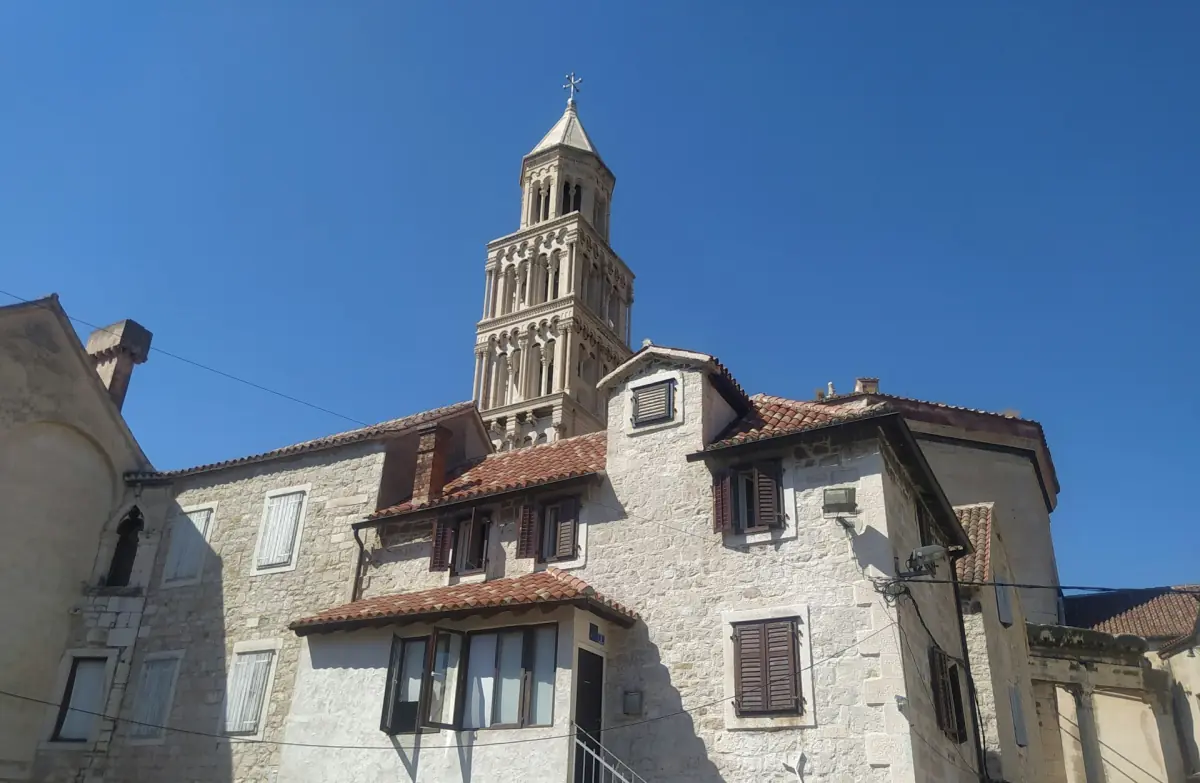
Accommodation in the inhabited palace
The historic complex combines Roman remains with buildings changed and added over subsequent centuries. Staying inside it means choosing an address in that layered setting. The southern part once held the emperor's residential and ceremonial spaces, while the northern part included service functions. Today's accommodation occupies the later living city, so use the present street address rather than an imagined intact imperial residence to understand your location.
Visitor accommodation is described around the Vestibule. This is a useful landmark if the architecture is your main reason for staying here: the Vestibule formed the approach to the imperial residential area, and the Peristyle is the central ceremonial square. For a palace-focused stay, compare how each address connects to these landmarks. A location description should lead you to a particular street or entrance, rather than simply repeat the word palace.
Choose the building as carefully as the neighbourhood. Ask the accommodation about access to the actual room, the entrance you should use and the arrangements for your arrival. If stairs or carrying bags affect your choice, make those questions part of the property selection. A photograph of an old stone lane tells you about the setting; the room's access arrangements need their own answer.
Our pick: old town orientation
Our take: This walk offers local tips for exploring the area around the palace.
Hand-picked tours, booked through Viator. Prices are indicative starting prices in euros (as of October 2026). Tap a tour for live availability and the current price in your currency.
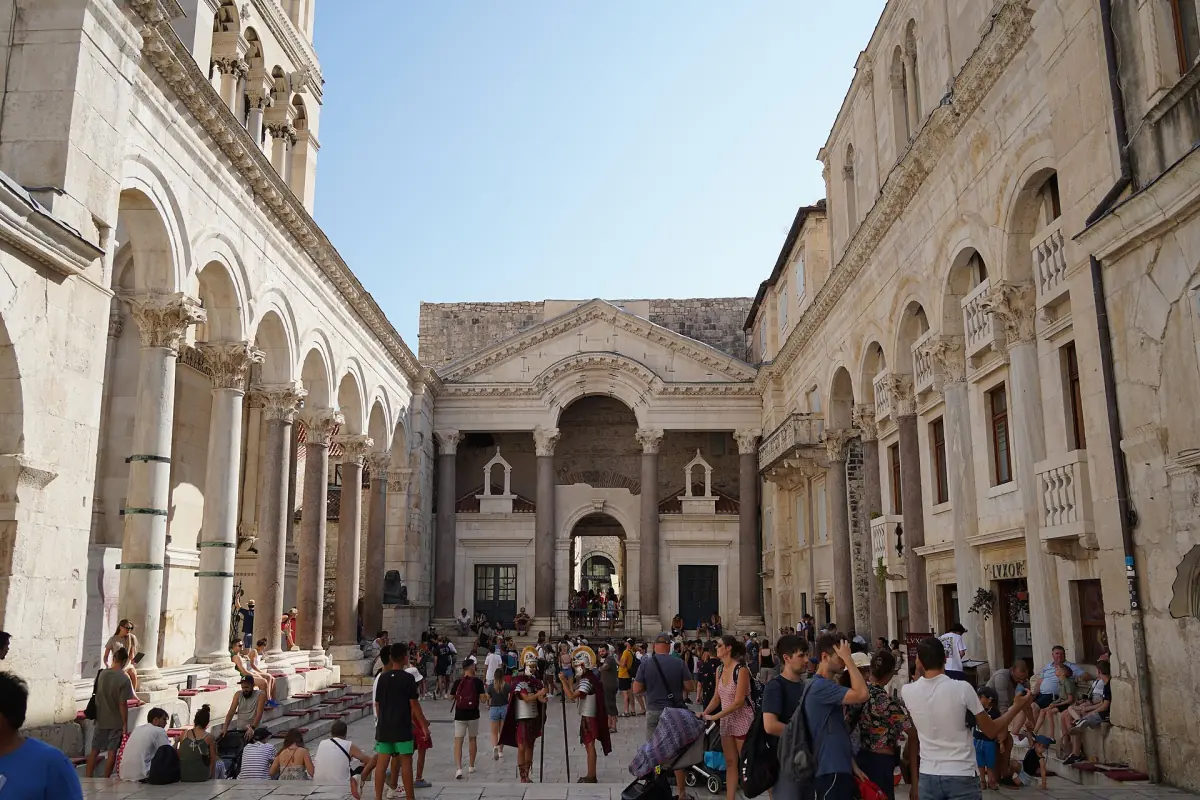
Get your bearings in the palace quarter
A 90-minute palace and Old Town walk with a licensed local guide combines orientation with local suggestions; accommodation and hotel pickup are separate arrangements.
Southern edge or northern lanes
The Riva runs along the palace's southern façade. It provides a clear waterfront reference for comparing southern addresses and for approaching from the transport area. The Brass Gate, Porta Aenea, links this side with the substructures and the route towards the Peristyle. When evaluating a southern location, trace the route from the Riva to the actual accommodation entrance instead of stopping your planning at the seafront.
On the northern side, the Golden Gate provides a different reference. The palace's main streets divide the historic layout, while the eastern Silver Gate connects with the Decumanus towards the western Iron Gate. These landmarks let you compare northern and southern addresses without turning them into a ranking. Choose the approach that fits your movements: arrival, sightseeing and departure may each favour a different route.
The port edge is another distinct location. Split's main bus station and railway station sit beside the city ferry port. If your next journey begins there, compare the complete walk from a candidate address to your actual departure point. Keep the port, the Riva and the palace core separate in your notes, even when all appear in the same accommodation description.
Arrival and the final walk
For a flight arrival, decide how you will get from Split Airport to town before choosing the final pedestrian approach. The airport shuttle reaches the main bus station; a taxi or booked transfer needs an agreed permitted drop-off point. The arrival guide explains these options. Pair the transport destination with instructions from your accommodation so that you know where the road journey ends and your walk begins.
With luggage, follow the entrance instructions for your own address. The route from the Riva through the southern substructures is an architectural connection, while the approach from the Peristyle includes stairs. Ask for a suitable route if steps matter to you. Arrange any help with bags directly with the accommodation before relying on it, and keep the entrance information available when you arrive.
A guided walk can help once you have settled in. The orientation tour starts outside the southern Brass Gate on the sea-facing side, at the entrance to the cellars. Its licensed local guide covers the palace and Old Town and offers local suggestions. Use it to connect landmarks and streets in your mind, then return to the corners that interest you independently.
Wider Split locations
Varoš and Lučac are historic suburbs outside the core, useful for comparing the boundary of a palace-focused search. Veli Varoš lies on the approach towards Marjan and has steep lanes. If your search expands into broader city neighbourhoods or your itinerary centres on days elsewhere in Split, continue with Split locations and city planning. Here, keep the decision centred on the palace address and its walking connections.
Questions about staying in the palace
Can visitors stay within the historic palace area?
Yes. The quarter is inhabited, and visitor accommodation is described within its historic buildings, including the Vestibule area. Compare the exact address and room access.
How should I choose between the Riva and northern lanes?
Use the southern Brass Gate and northern Golden Gate as reference points, then compare the route to your accommodation, arrival point and preferred sights.
Does the orientation walk include somewhere to stay?
The experience is a guided walk through the palace and Old Town with local suggestions. Book your overnight accommodation and arrival transport separately.