
The Cathedral of Saint Domnius in the palace
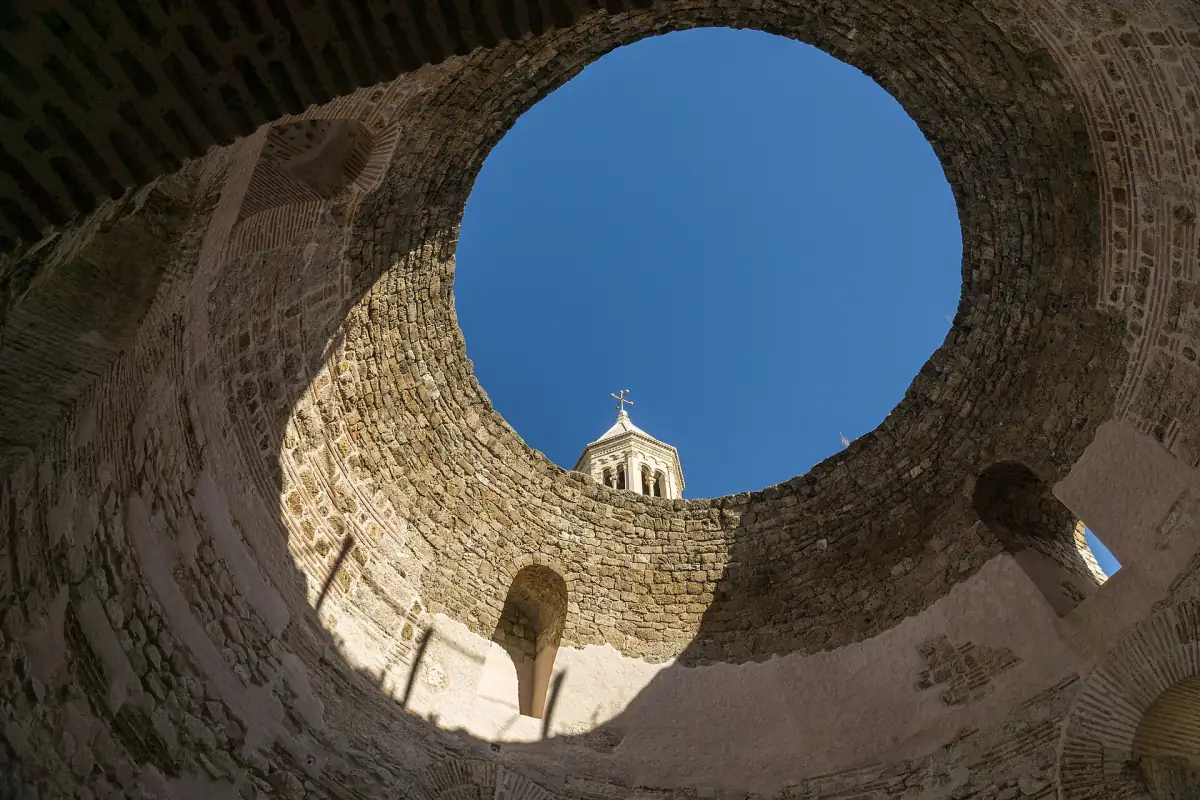
The Cathedral of Saint Domnius occupies Diocletian's former mausoleum beside the Peristyle. Its conversion into a cathedral in the seventh century gives this part of the palace a different story from the surrounding streets. An imperial funerary building became a Christian place of worship, and the cathedral remains an active church today. For a visit, separate the building's history, the bell tower climb and the nearby Jupiter Temple rather than treating them as one undivided interior.
The familiar Saint Domnius name refers to Split's patron saint and his relics. The cathedral parish is dedicated to the Assumption of the Blessed Virgin Mary. Those names describe different aspects of the same cathedral, so seeing either name in local information need not send you looking for another church. The palace history guide puts this change of use into the longer development of the inhabited complex.
Start by relating the cathedral to the Peristyle. The square once served imperial representation and later became a religious centre. Looking between the former mausoleum, the colonnades and the surrounding buildings helps make the sequence visible. The palace streets are free to explore, while admission to individual attractions needs its own planning. A street walk and an interior visit are different parts of the day.
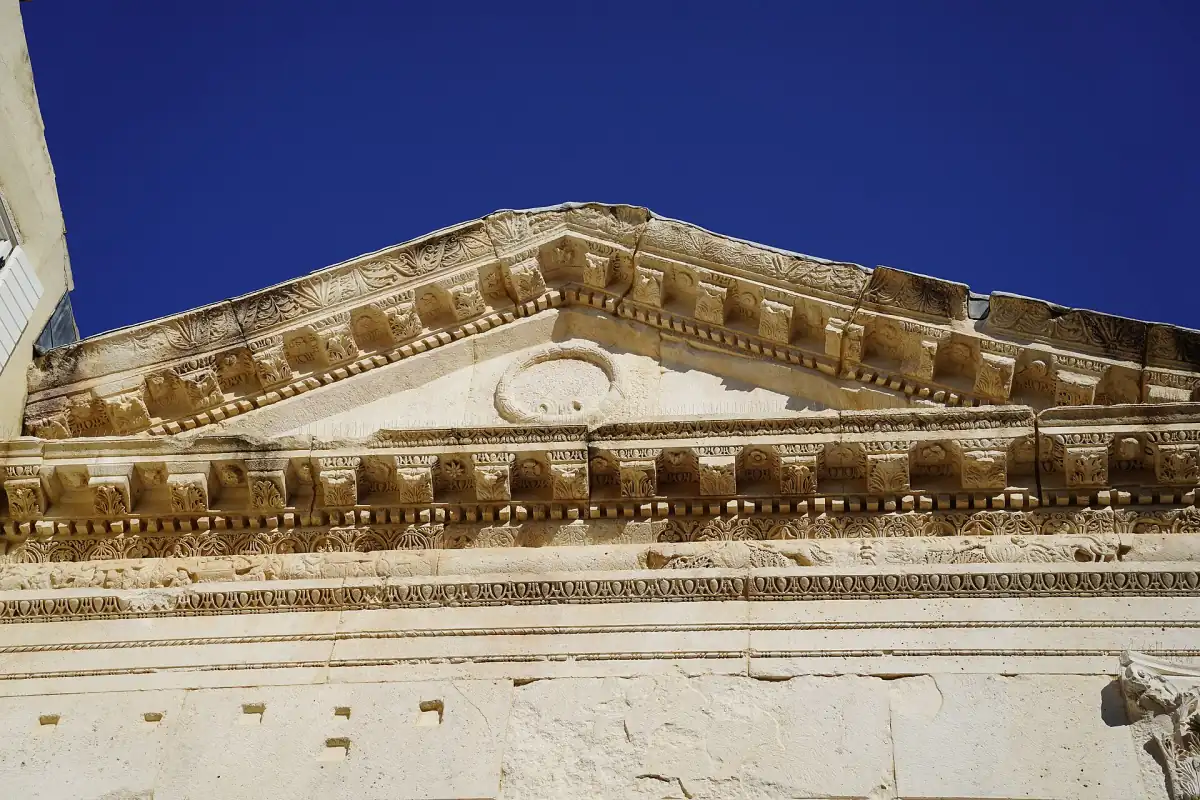
Our pick: cathedral photo stop
Our take: This old town walk includes a photo stop at the cathedral.
Hand-picked tours, booked through GetYourGuide. Prices are indicative starting prices in euros (as of October 2026). Tap a tour for live availability and the current price in your currency.
A palace walk with cathedral photo stops
This guided old-town walk visits the Peristyle and Vestibule and includes photo stops at the cathedral and Jupiter Temple; interior and tower admission are not included.
Wooden doors and the bell tower
The wooden doors by Andrija Buvina date to 1214. They add a medieval work of art to a building whose original purpose was Roman. Keep those periods distinct when looking at the cathedral: the mausoleum's origin does not make every feature around it an unchanged survival from Diocletian's lifetime. This is a useful place to approach the palace as architecture that continued to be used and altered.
The bell tower is 57 metres high. Construction began in the thirteenth century, followed by substantial renewal around the turn of the twentieth century. Its present appearance therefore belongs to more than one phase. A climb involves stairs, so consider the ascent separately from looking at the cathedral or walking around the Peristyle. If stairs do not suit your plans, the square still gives you a way to place the tower within the ensemble.
For a wider architectural route, continue with the Peristyle and Vestibule guide. It explains the imperial southern part of the palace and the relationship between spaces above ground and the substructures. That context is useful even if your main interest is the cathedral, because the church stands within a much larger arrangement of streets, ceremonial spaces and later buildings.
Jupiter Temple and the baptistery
The Jupiter Temple is a rectangular building on a raised podium. Its later use as the Baptistery of Saint John offers another example of an ancient structure receiving a Christian function. Inside are a medieval baptismal font and a sculpture of Saint John by Ivan Meštrović. An Egyptian sphinx stands before the building. Look at these as distinct elements rather than assuming that every object belongs to the temple's original period.
Pairing the temple with the cathedral makes sense as a visit focused on changes in religious use. The former mausoleum became a cathedral, while the temple became a baptistery. The buildings let you compare those transformations without extending the route into a general city tour. Allow a separate decision for temple entry: a photo stop outside and admission to the interior are different activities.
Admission and church services
Plan cathedral, tower and temple admission by the specific places you want to enter. Ask for the current visitor arrangements and the contents of any ticket offered on the day. Do not use the free palace street walk as a guide to the admission arrangements of these individual attractions. The opening-hours guide explains why the inhabited palace district and its separately managed spaces need different calendars.
Worship and sightseeing also need separate space in your plan. The cathedral has regular liturgical use, so arrange an interior visit around the current visitor information rather than using a service as a sightseeing opportunity. The guided walk featured here provides a local guide, the Peristyle and Vestibule, and cathedral and temple photo stops. Choose it for the palace setting and explanations, then plan any church interior or tower climb separately. For other walking formats, see palace tours.
Questions about the cathedral
Was the cathedral originally a mausoleum?
Yes. It uses Diocletian's former mausoleum, converted into a cathedral in the seventh century. Later features include Buvina's wooden doors and the bell tower.
Does the featured walk include the tower?
The walk includes cathedral and Jupiter Temple photo stops. Cathedral interior, temple interior and tower admission are not included in those stops.
How high is the bell tower?
The tower is 57 metres high, and the ascent uses stairs. Treat the climb as a separate choice from your visit around the Peristyle.