
Choosing the best time to visit Diocletian's Palace
The best time to visit Diocletian's Palace depends on how you want to explore this inhabited historic quarter. July and August have the highest monthly mean temperatures in the Split/Marjan climate table. April, May, September and October are cooler on average, making them useful alternatives to compare for a visit centred on walking. This is an interpretation of long-term climate figures, so keep the forecast for your actual dates separate.
The palace combines public streets with separately visited interiors. A walk through the lanes is different from a visit to the cellars or cathedral, both in purpose and in scheduling. Begin with the architecture and sights guide, then decide which indoor visits matter to you. Your preferred month and the opening calendar need to work together.

Weather by month
The figures below are monthly normals for Split/Marjan for 1991 to 2020, published by JMA and consulted in November 2026. The temperature column is the monthly mean; it describes the month as a whole rather than a daytime high or nighttime low. The rainfall column gives the monthly precipitation normal. Use these figures to compare seasons before looking at the weather forecast close to departure.
| Month | Mean temperature °C | Precipitation mm |
|---|---|---|
| January | 8.2 | 73.7 |
| February | 8.6 | 64.4 |
| March | 11.4 | 65.3 |
| April | 15.0 | 63.3 |
| May | 19.7 | 55.3 |
| June | 24.2 | 50.3 |
| July | 26.8 | 26.0 |
| August | 26.7 | 31.0 |
| September | 21.8 | 80.8 |
| October | 17.5 | 84.4 |
| November | 13.1 | 116.3 |
| December | 9.4 | 98.2 |
July combines the highest monthly mean temperature with the lowest precipitation normal in this table. August is similarly warm on average. For a route focused on the gates, Peristyle and Vestibule, compare these conditions with your own comfort while walking outdoors. Choose clothing and the length of your outdoor stages using the forecast for your visit, rather than treating a climate normal as the conditions you will encounter.
April and May offer lower monthly means than high summer, as do September and October. Those autumn months also have higher precipitation normals than April and May in the table. This helps explain the trade-off when selecting dates: compare both temperature and rainfall instead of choosing from the season's name alone. November has the highest precipitation normal of the year here, so keep the outdoor and indoor parts of your plan flexible.
Our pick: walk from the Peristyle
Our take: This guided walk starts at the Peristyle as part of your visit planning.
Hand-picked tours, booked through Viator. Prices are indicative starting prices in euros (as of October 2026). Tap a tour for live availability and the current price in your currency.
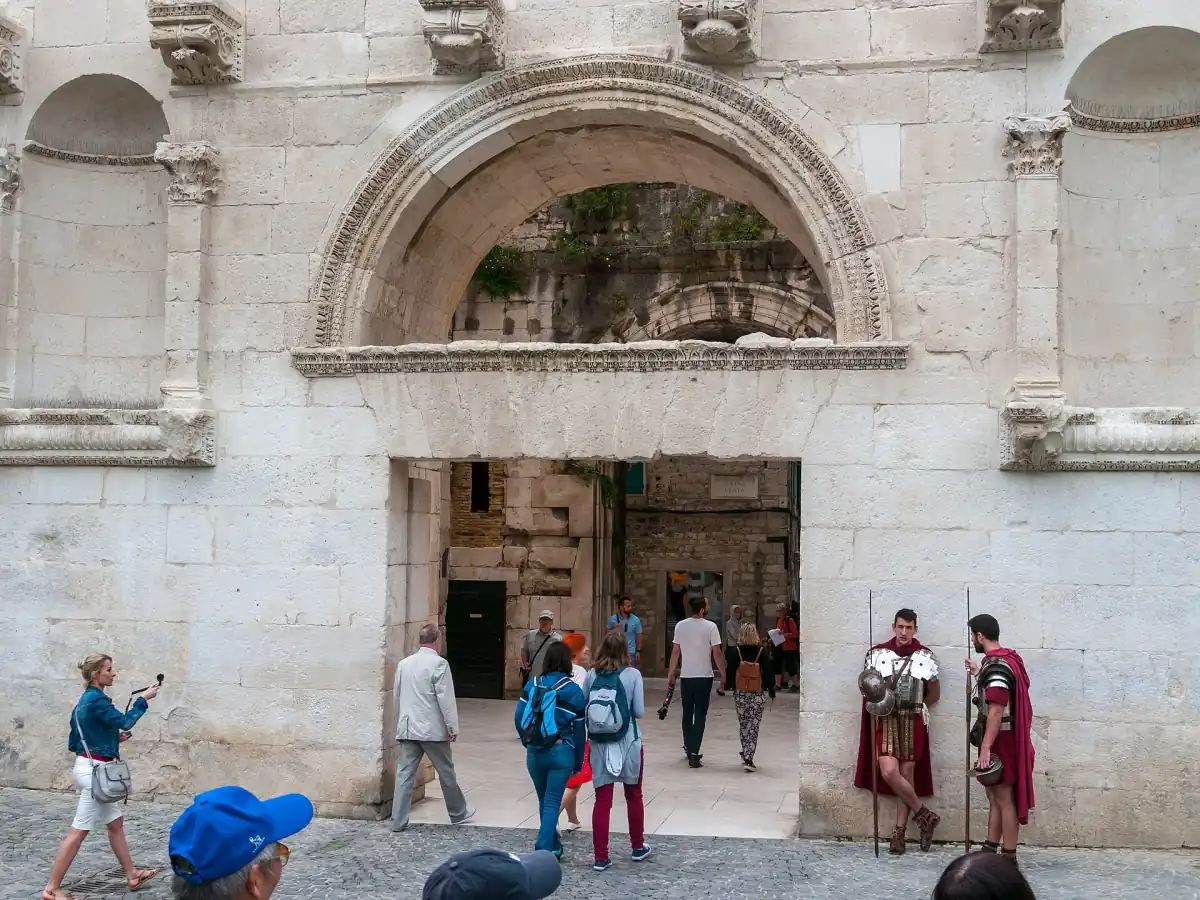
A palace walk to fit your itinerary
This 90-minute guided walk starts at the Peristyle and introduces the palace quarter; choose from the departure times offered for your dates.
Winter and December
December's monthly mean is 9.4°C and its precipitation normal is 98.2 mm in the same climate series. A winter visit therefore needs both an outdoor plan and a clear idea of which interiors you want to see. The lanes belong to the inhabited city, while the cellar museum follows a seasonal opening calendar. Treat the calendar as part of the route rather than leaving it until after your walk.
For the season from 1 November 2026 to 28 March 2027, the cellars list daily opening from 09:00 to 17:00, with last admission at 16:30, subject to the following closed dates within that season: 18 November 2026, 25 and 26 December 2026, 1 January 2027, 6 January 2027 and 28 March 2027. If the cellars are central to your visit, select a date around this calendar.
Christmas planning deserves particular attention because the December closures affect the indoor visit even though the palace is also a city district. Keep the cellar calendar separate from arrangements for the cathedral, which is an active place of worship. The opening-hours guide explains the different parts of the complex; use it when arranging the sequence of your day.
Combine a walk with indoor sights
A useful structure is to choose your main walk and then add the interior you most want to understand. The Peristyle and Vestibule introduce the ceremonial southern palace, while the substructures help explain the plan of the former imperial rooms above. The cellar visit has its own entry arrangements. Select it deliberately rather than counting the central passage and the museum rooms as the same visit.
The guided walk offered here meets at the Peristyle. Its 90-minute duration can help you organise the day, but allow separate time for reaching the meeting point and for any additional interior visit. The guide introduces the palace setting; build your indoor programme around the specific admissions you choose. For a closer comparison of formats, see palace walking tours.
Once your dates are fixed, review the forecast and the opening information together. You can then decide where to put the outdoor walk and how to fit the indoor programme around it. Keeping these decisions separate from the original month choice gives you a practical itinerary rather than a list of sights attached to a season.
Seasonal planning questions
Which months are warmest on average?
July and August have the highest monthly means in the Split/Marjan 1991 to 2020 table, at 26.8°C and 26.7°C respectively. These are monthly means, not daily maximum temperatures.
Is spring or autumn worth considering for walking?
April, May, September and October are cooler on average than high summer in this climate series. Compare rainfall too, then use the forecast for your dates.
Can I plan a cellar visit in December?
Use the winter calendar for 1 November 2026 to 28 March 2027. It includes December opening days, with closures on 25 and 26 December 2026 within that season.