
Reading Diocletian Palace history in the streets
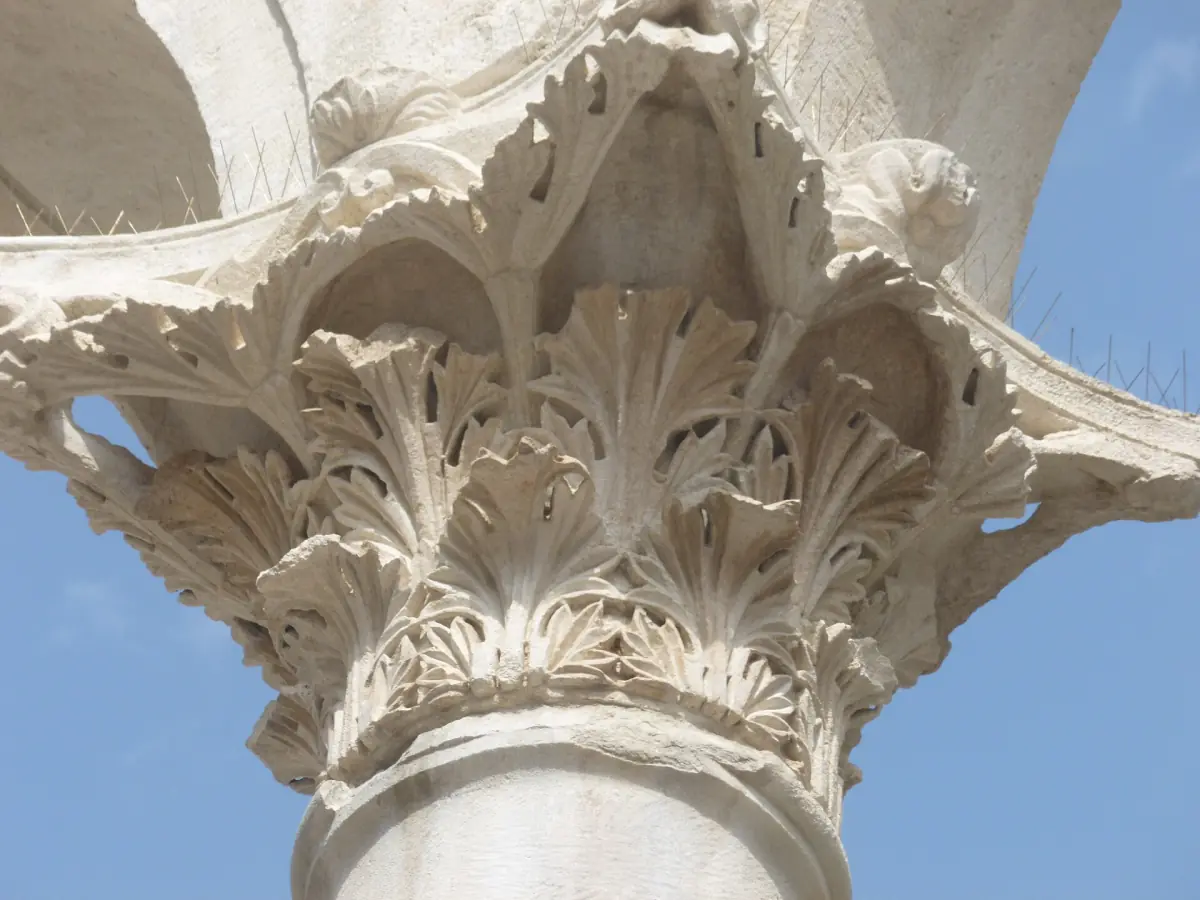
Diocletian Palace history begins with construction in the late third and early fourth centuries AD. The complex combined an imperial villa with the organisation of a Roman military camp. That combination helps explain why a visit includes both monumental spaces associated with the emperor and a strong framework of streets, gates and functional quarters. What you walk through today also reflects centuries of later building inside that framework.
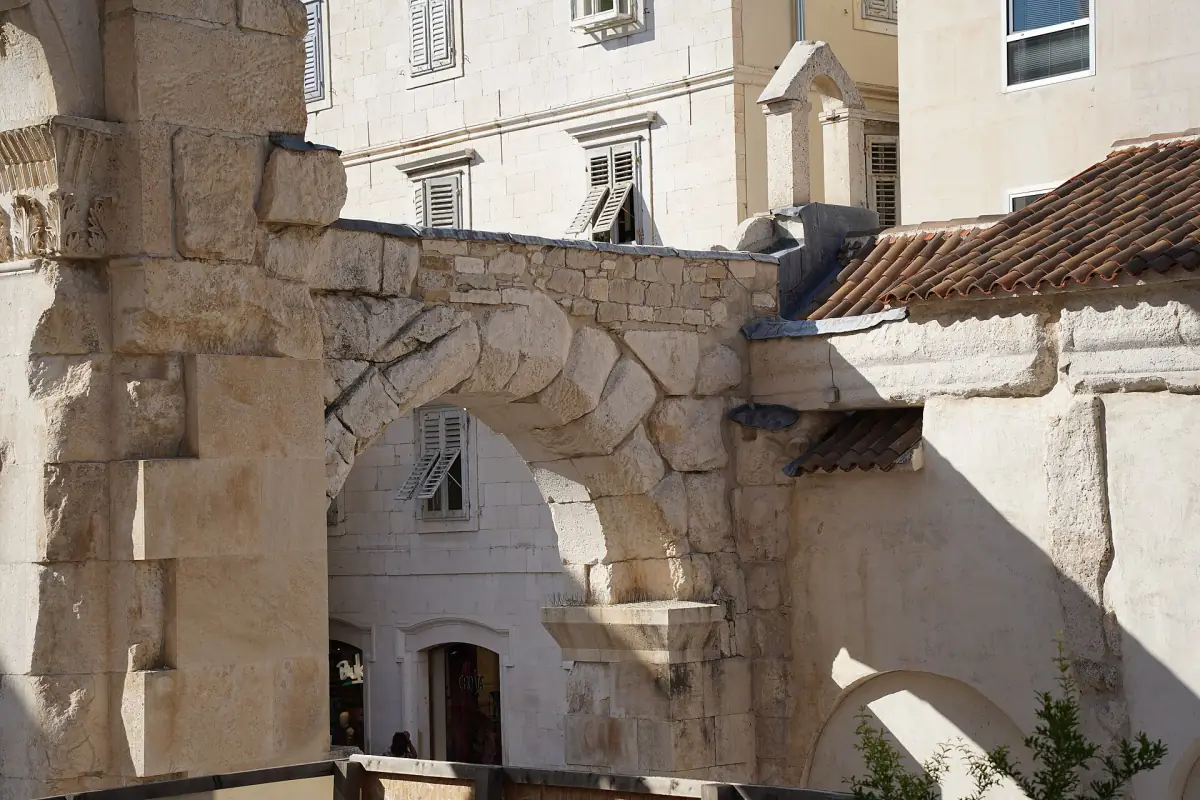
The palace is still inhabited. Its history is therefore more than the story of an ancient residence: it is also the story of a city adapting buildings and walls to new uses. A historical guide can connect a gate, an architectural detail and the layout of a square without treating every visible facade as Roman. For a building-by-building introduction, use the guide to palace architecture and interiors alongside this historical overview.
An imperial plan with different functions
Main streets divided the original complex into four parts. The southern part contained the imperial living and ceremonial spaces, while the northern quarters accommodated functions including guards, service staff and storage. The Cardo and Decumanus provide a way to understand those divisions while walking through the later city. They are useful historical organising lines, even when your attention is drawn to the buildings added around them.
The Peristyle was the central ceremonial square, with the emperor appearing at the Protyron. The Vestibule formed an entrance to the imperial residential area: rectangular outside and circular inside. The former apartments are not fully preserved. To understand their plan, the substructures beneath the residence are especially useful, because they supported the upper rooms and mirror their arrangement. A walk among today's buildings and a cellar visit reveal different parts of the same architectural story.
Our picks: history walks
Our take: Choose the 3D walk for reconstructed views or the ancient and medieval walk for a local guide’s perspective. The history experience with craft beer adds a Croatian drink.
Hand-picked tours, booked through Viator and GetYourGuide. Prices are indicative starting prices in euros (as of October 2026). Tap a tour for live availability and the current price in your currency.
Split history walk with craft beer
- Croatian craft beer
The experience includes a Croatian craft beer.
Check availability →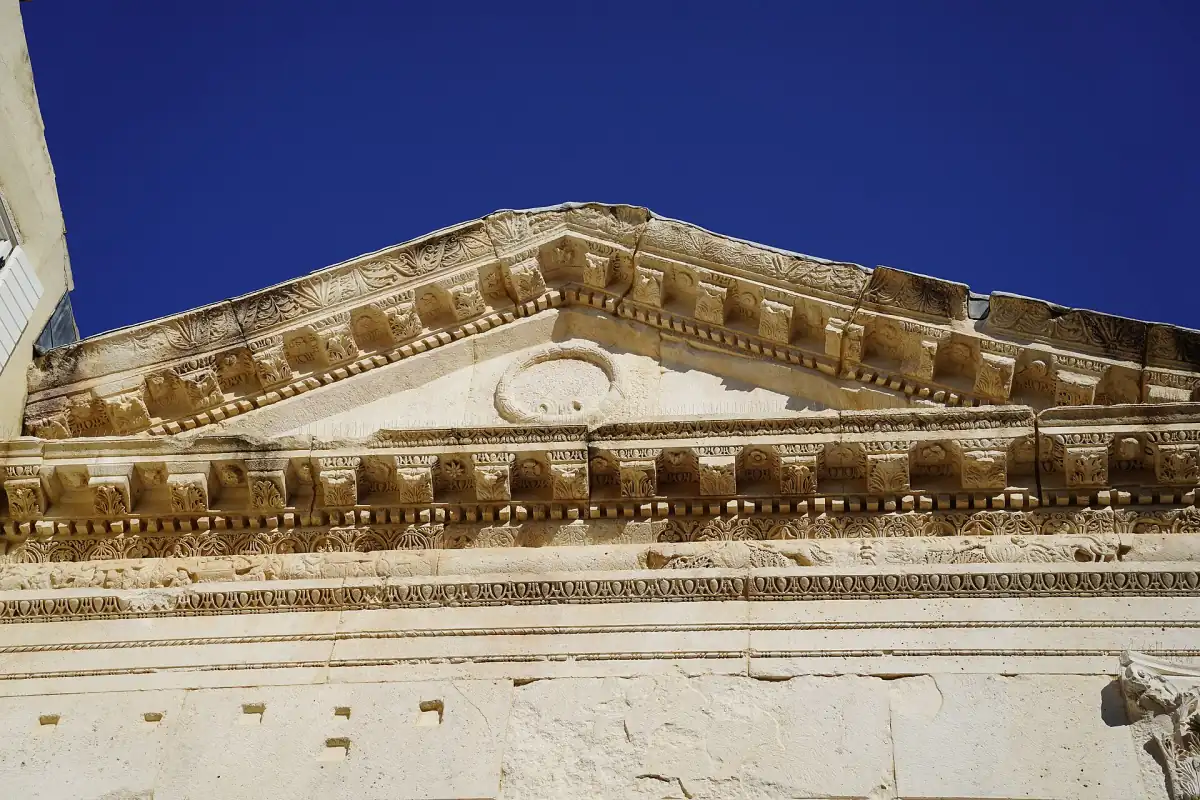
Palace history with 3D reconstructions
- Headset for connecting to the tour guides audio system
- Demonstration with 3D reconstructions
A history graduate explains the palace with 3D reconstructions; real interior admission is not included.
Check availability →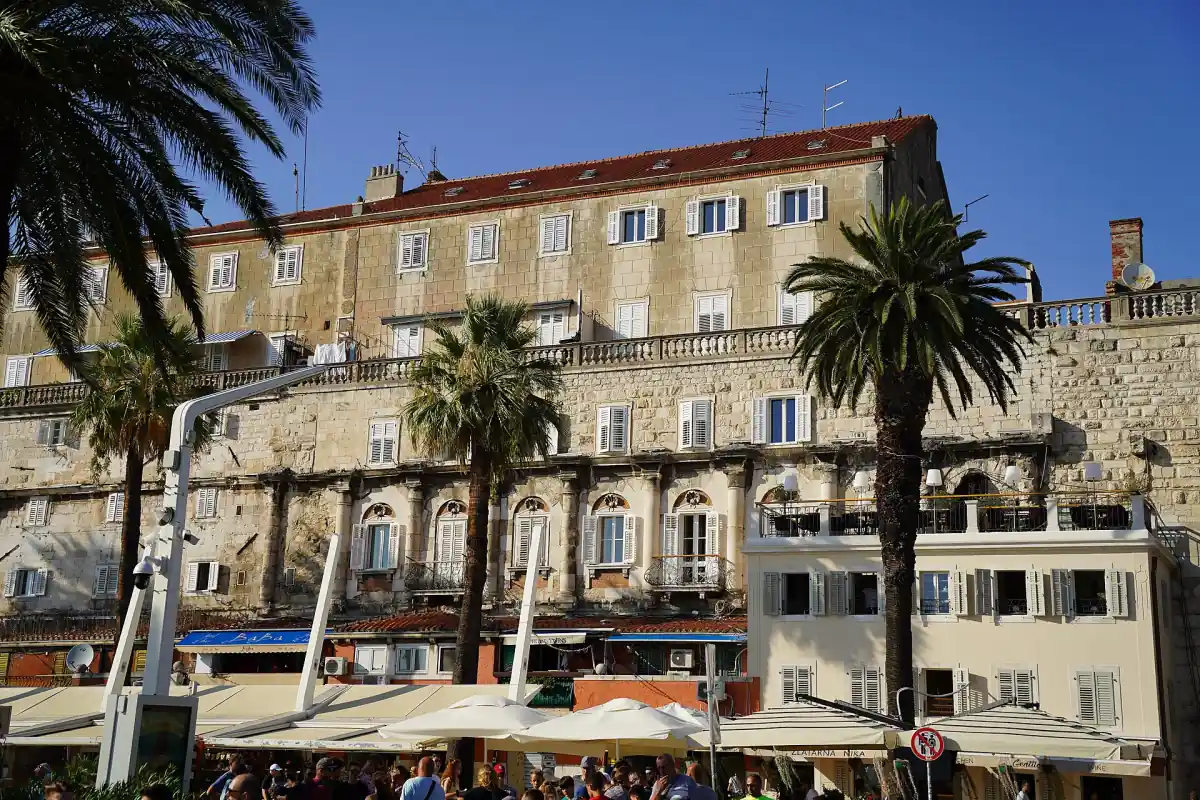
Ancient and medieval Split walk
- Licenced professional guide
- Ancient and medieval part of the city
A local guide introduces the ancient and medieval parts of the city.
Check availability →Historical walks through the palace
Compare a themed dark-history walk with craft beer, a history graduate's tour using 3D reconstructions, and a walk linking the ancient and medieval city.
Historical tours: three ways to follow the story
The dark-history walk lasts one and a half hours and starts at Hrvojeva 9. Its theme is the darker side of Split's historical storytelling, and a Croatian craft beer is included. Choose this for a particular narrative angle on the city rather than a general ticket to its interiors. The included drink is the specific extra in the programme; the historical theme gives the walk its character.
The small-group walk led by a guide with a master's degree in history and teaching experience lasts 100 to 110 minutes. It begins at the Brass Gate, the small southern entrance from the Riva into the cellars. Included headsets connect visitors to the guide's audio system, and demonstrations with 3D reconstructions help explain the earlier appearance of the complex. Those images provide a way to picture lost spaces while looking at the surviving setting.
The 90-minute ancient-and-medieval walk meets at the fountain in Strossmayer Park, above the Golden Gate; the guide carries an open green umbrella. A licensed professional guide covers the ancient and medieval parts of the city and the UNESCO heritage setting. This is a useful choice if you want the Roman complex placed in the context of the city that grew around and within it. For a broader comparison of guided formats, see palace walking tours.
From mausoleum to cathedral and medieval city
The emperor's mausoleum became the cathedral in the seventh century. That change of use is one of the clearest links between the ancient palace and the later religious centre. At the Cathedral of Saint Domnius, the building's origin and its continuing church function belong to different stages of the story. The wooden doors by Andrija Buvina date to 1214, adding a medieval layer to a structure with a much earlier beginning.
Residents altered buildings and outer walls over the centuries. Romanesque churches, medieval fortifications and Gothic, Renaissance and Baroque palaces all form part of the historical complex. UNESCO inscribed the Historical Complex of Split with the Palace of Diocletian in 1979. That recognition concerns the wider ensemble, so the later city is part of what matters here. Looking only for untouched Roman remains would miss much of the place you have come to understand.
Questions about the palace's past
When was the palace built?
Construction belongs to the late third and early fourth centuries AD. The design combined an imperial villa with features of a Roman military camp.
Are the emperor's apartments still complete?
The former imperial apartments are not fully preserved. The supporting substructures help visitors understand their layout.
Why is the medieval city part of the visit?
Later residents changed and reused the palace. The UNESCO ensemble includes medieval and later buildings as well as the Roman complex.