
The Golden Gate in Split, Croatia, and the Cardo
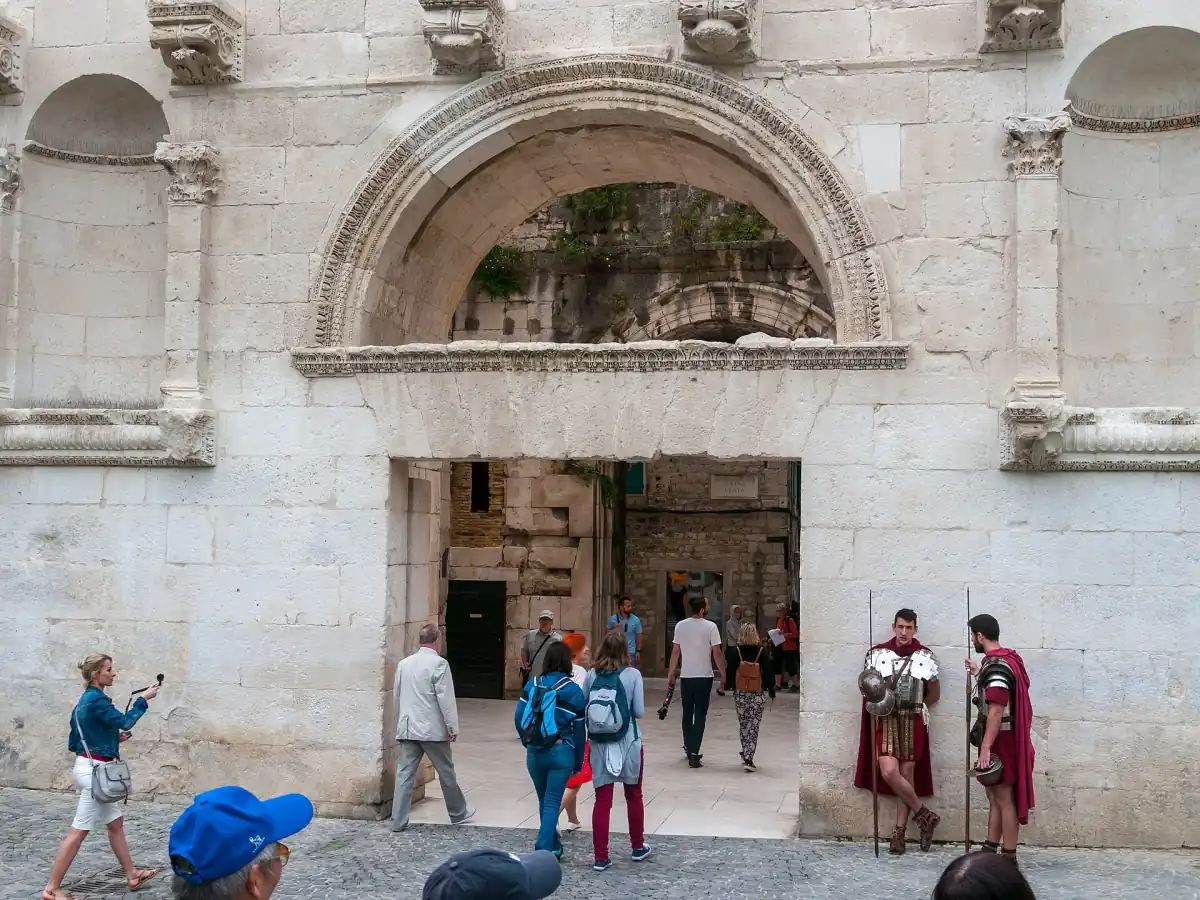
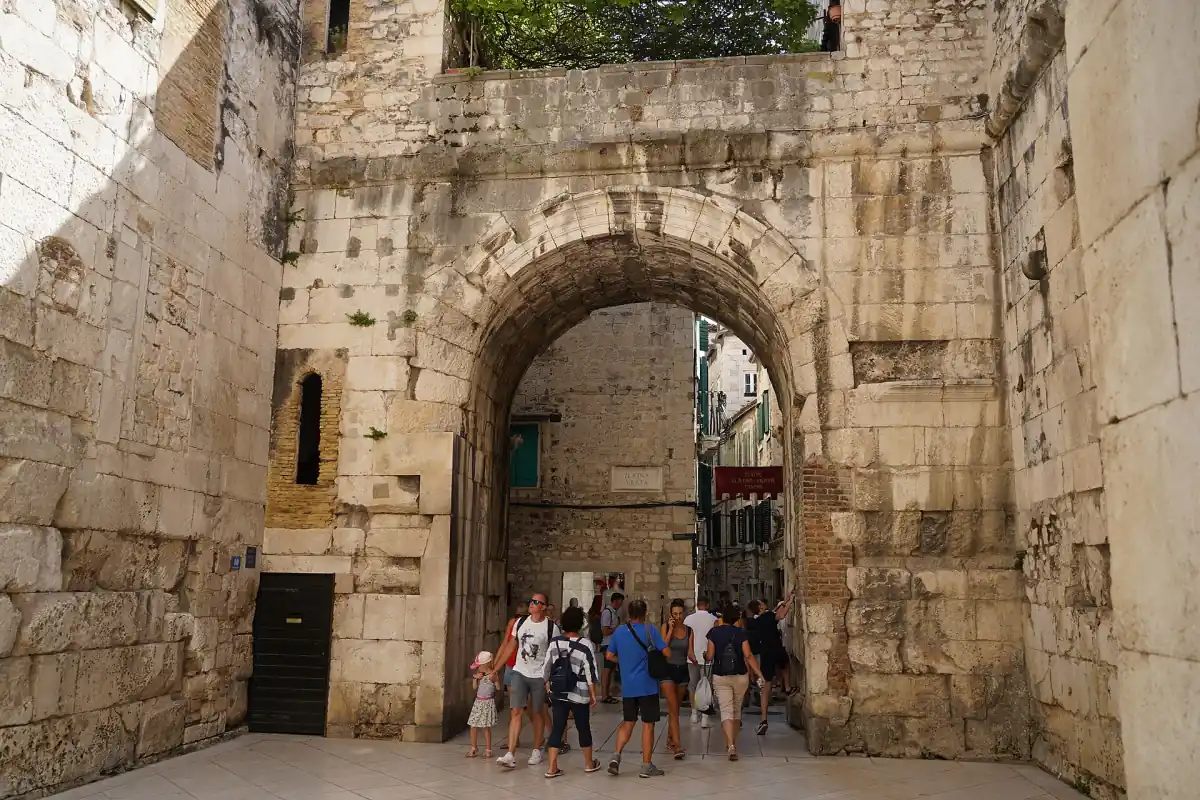
The Golden Gate in Split, Croatia, marks the northern side of Diocletian's Palace. Its Roman name is Porta septemtrionalis, and the Cardo connected this side of the complex towards Salona. For a first visit, think of the gate as part of a street system. The four entrances help you understand an inhabited district whose Roman plan has been adapted over centuries, with public streets and individual attractions serving different purposes.
The northern approach gives you a useful starting point for following the palace layout. Once through the gate, use the Cardo as your reference rather than treating every lane as an unrelated turn. The palace combined an imperial villa and a military camp, with principal streets dividing it into four parts. Imperial residential and ceremonial spaces occupied the south, while northern areas included accommodation for guards, service staff and storage.
A gate can also be a tour meeting point, but the name alone is not enough to identify where to wait. The English-language walk featured on this page starts at the Golden Gate, down the stairs from the bronze statue of Gregory of Nin. Its guide carries a blue umbrella. This is a specific meeting arrangement for that walk. Other palace tours use different starts, so distinguish your chosen entrance from the precise point on your booking.
Our pick: from the Golden Gate
Our take: This English-language walk starts at the Golden Gate.
Hand-picked tours, booked through Viator. Prices are indicative starting prices in euros (as of October 2026). Tap a tour for live availability and the current price in your currency.
An English-language walk from the Golden Gate
This 90-minute walk begins at the northern gate and includes a professional local guide and palace sightseeing; plan individual interior admission separately.
The Silver Gate and Decumanus to the Iron Gate
The Silver Gate, or Porta orientalis, is the eastern entrance. It connects with the Decumanus, the main route running west towards the Iron Gate. This east-to-west relationship gives you another simple way to read the palace. If the Golden Gate explains the northern approach, the Silver and Iron gates show how the principal streets connect opposite edges of the complex.
The Iron Gate is the Porta occidentalis on the west. It stands at the connection with the later city centre. Consider the pair together when planning a walk: entering from one side and orienting towards the other helps put the street axis into practice. You can then turn your attention to the southern ceremonial area. The architecture and interior guide explains the Peristyle and Vestibule, so you can connect the gates with the spaces they help you reach.
These names describe location and history, rather than a single visitor facility. The palace remains a lived-in part of the city. A walk through its streets is free, while visits to separately managed interiors need their own decisions. Reaching the district through a gate is therefore a different matter from having admission to the cathedral, temple or cellar museum rooms.
The Brass Gate, Porta Aenea and the Riva
The southern entrance is the Porta meridionalis, also known as Porta Aenea or the Brass Gate. It leads through the substructures towards the waterfront. You may also encounter the translation Bronze Gate for this entrance. Keep the southern gate distinct from the Golden Gate in the north: the metal names can be easy to confuse when comparing directions with another person.
The Riva runs along the southern palace façade. From this side, the route through Porta Aenea and the central cellar passage leads towards the Peristyle. The substructures supported the imperial apartments and reflect their layout. Their central passage, with souvenir sales, and the side museum rooms are different parts of the southern visit. The cellar guide explains the paid visit, while the opening-hours page covers its seasonal calendar.
Choose an entrance, then locate the meeting point
Choose your approach by the part of the palace you want to understand first. The northern gate connects with the Cardo, the eastern and western gates with the Decumanus, and the southern entrance with the waterfront and substructures. This is a planning framework rather than a promise about access at every hour. For an interior visit, add the relevant attraction's visitor arrangements to your street route.
Arriving from the ferry port, railway station or main bus station gives you a reason to consider the waterfront side. The main bus station stands beside the port and railway station; the arrival guide explains the onward approach. If your tour starts at the Golden Gate, carry on to that specified meeting point rather than waiting at the southern entrance. Allow your own margin for finding the guide and navigating the lanes, without relying on a fixed walking time between gates.
The featured walk lasts 90 minutes and includes an English-speaking professional local guide and palace sightseeing. Its Golden Gate start makes it relevant if you want an introduction from the northern side. It offers explanations along a real walking route; individual interior admission remains a separate part of your visit planning. You can also use the four-gate framework independently, then spend more attention on the architecture or history that interests you.
Questions about the palace entrances
Which side is the Golden Gate on?
It is the northern entrance, also called Porta septemtrionalis. The Cardo links this side of the palace with the northern direction towards Salona.
Which gate faces the Riva?
The southern Porta Aenea, known in English as the Brass Gate, leads through the substructures towards the waterfront.
Where does the featured guided walk meet?
At the Golden Gate, down the stairs from the bronze statue of Gregory of Nin. Look for the guide with a blue umbrella; use the meeting instructions for this specific walk.